
Research Interests
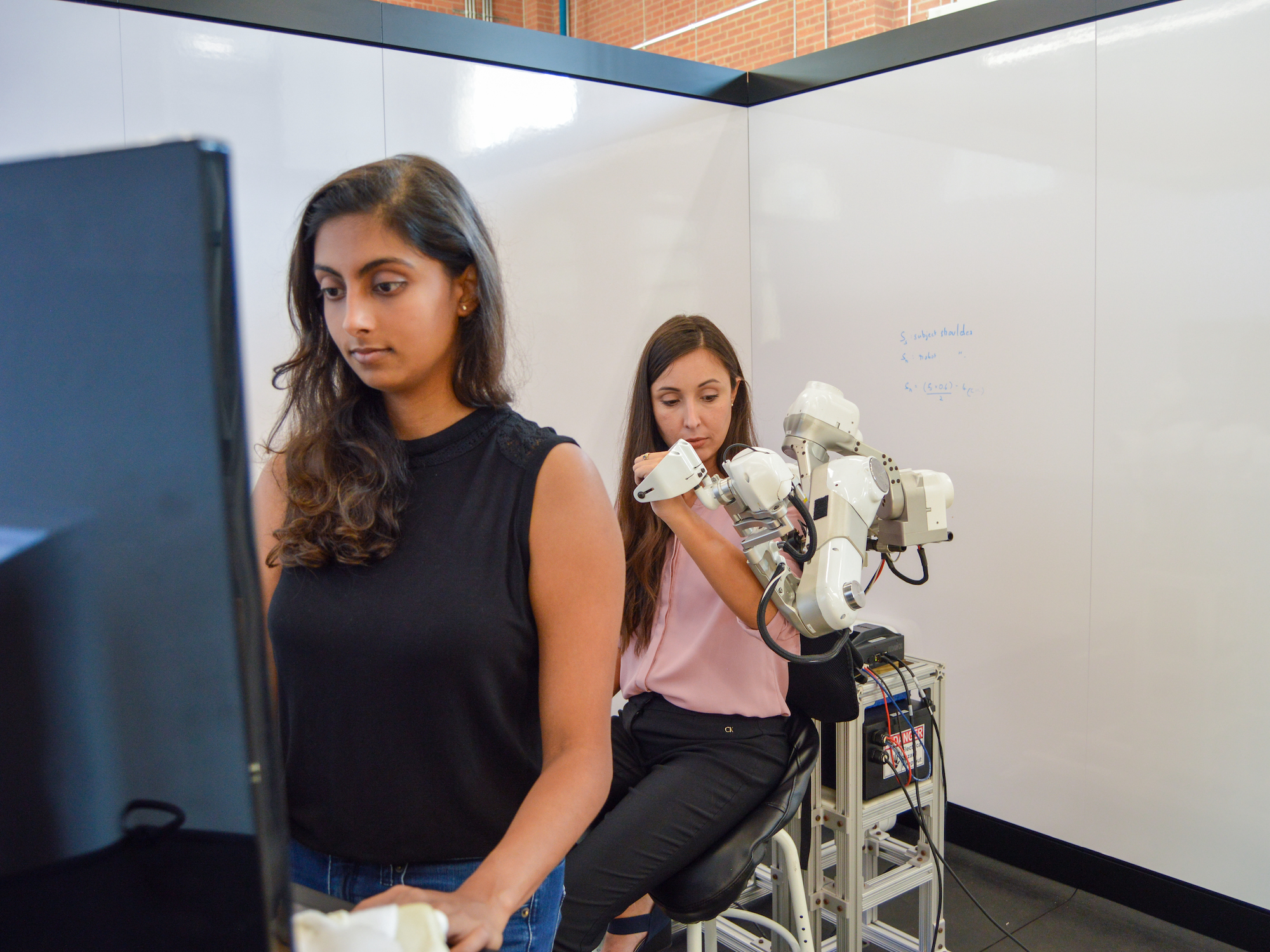
Control, modeling, estimation, optimization, diagnosis, and AI for dynamical systems, especially for automotive, vehicle, mobility, human-automation, robotics, energy storage, and manufacturing applications.
Bio
Junmin Wang is the Fletcher Stuckey Pratt Chair in Engineering and a Professor in Mechanical Engineering at University of Texas at Austin. In 2008, he started his academic career at Ohio State University where he was early promoted to Associate Professor in September 2013 and then very early promoted to Full Professor in June 2016. In 2018, he joined University of Texas at Austin as the Accenture Endowed Professor in Mechanical Engineering.
Professor Wang has a wide range of research interests covering control, modeling, estimation, optimization, diagnosis, and AI for dynamical systems, especially for automotive, vehicle, transportation, mobility, human-automation, robotic, energy storage, and manufacturing applications. His research contributions include the development of control and estimation methods that advance efficiency, driving safety, and emissions performance of conventional, electrified, connected, and autonomous/automated vehicles.
He has five years of full-time industrial research experience (2003–2008) at Southwest Research Institute (San Antonio, Texas), where he was a Senior Research Engineer and led research projects sponsored by more than 50 industrial companies and governmental agencies worldwide. His research programs at UT Austin and Ohio State University have been funded by federal agencies and industrial companies such as National Science Foundation (NSF), Office of Naval Research (ONR), Department of Energy (DOE), U.S. Department of Transportation (DOT), National Highway Traffic Safety Administration (NHTSA), Army Research Laboratory (ARL), Texas Department of Transportation, GM, Ford, Honda, Tenneco, Eaton, Ftech, Denso, and others.
Professor Wang is the author or co-author of more than 425 peer-reviewed publications (8 of which have received best paper awards from IEEE, ASME, and SAE), including 207 journal articles and 13 U.S. and European patents. He is a recipient of the ASME Charles Stark Draper Innovative Practice Award, IEEE Best Vehicular Electronics Paper Award, IEEE Andrew P. Sage Best Transactions Paper Award, IEEE Transactions on Fuzzy Systems Outstanding Paper Award, Ohio State University Lumley Interdisciplinary Research Award, Ohio State University Harrison Faculty Award for Excellence in Engineering Education, National Science Foundation (NSF) CAREER Award, Ohio State University Lumley Research Award, SAE International Vincent Bendix Automotive Electronics Engineering Award, and Office of Naval Research Young Investigator Program (ONR-YIP) Award. He is an IEEE Vehicular Technology Society Distinguished Lecturer, IEEE Systems, Man, and Cybernetics Society Distinguished Lecturer, IEEE Industrial Electronics Society Distinguished Lecturer, Fulbright Distinguished Scholar, SAE Fellow, ASME Fellow, AAIA Fellow, and IEEE Fellow.
Professor Wang serves as a member of the Board of Directors of the American Automatic Control Council (AACC) and a voting member of the Executive Committee of the ASME Dynamic Systems and Control Division. He has served as a Senior Editor, Editor, Technical Editor, or Associate Editor for IEEE Vehicular Technology Magazine, IEEE Transactions on Vehicular Technology, IEEE/ASME Transactions on Mechatronics, IFAC Control Engineering Practice, IFAC Mechatronics, ASME Journal of Dynamic Systems, Measurement, and Control, Journal of the Franklin Institute, and SAE International Journal of Engines. He has also served as Chair of the ASME Automotive and Transportation Systems Technical Committee, Chair of the SAE International Control and Calibration Committee, Chair of the IFAC Intelligent Autonomous Vehicles Technical Committee, and Co-Chair of the IEEE Technical Committee on Autonomous Ground Vehicles and Intelligent Transportation Systems.
Educational Qualifications
- Ph.D., Mechanical Engineering, University of Texas at Austin, 2007
- M.S., Electrical Engineering, University of Minnesota, Twin Cities, 2003
- M.S., Mechanical Engineering, University of Minnesota, Twin Cities, 2003
- M.S., Power Machinery and Engineering, Tsinghua University, 2000
- B.S., Automotive Engineering, Tsinghua University, 1997
Select Awards & Honors
- ASME Charles Stark Draper Innovative Practice Award (2024)
- Fulbright Distinguished Scholar, U.S. Department of State (2024)
- IEEE Fellow, Institute of Electrical and Electronics Engineers (2024)
- IEEE Best Vehicular Electronics Paper Award (2019)
- IEEE Andrew P. Sage Best Transactions Paper Award (2018)
- IEEE Transactions on Fuzzy Systems Outstanding Paper Award (2017)
- ASME Fellow, ASME (American Society of Mechanical Engineers) (2016)
- SAE Fellow, SAE (Society of Automotive Engineers) International (2015)
- National Science Foundation (NSF) CAREER Award (2012)
- SAE International Vincent Bendix Automotive Electronics Engineering Award (2009)
Related Websites
https://sites.utexas.edu/jwang/
Select Publications